Akira Ransomware
- 86
- Global rank
- 90
- Month rank
- 60
- Week rank
Akira Ransomware emerged in March 2023 and compromised over 250 organizations by January 2024 with approximately $42 million in ransom payments. It employs double extortion tactics exfiltrating data before encryption and threatening to publish it on a dedicated website.
- Ransomware
- Type
- Unknown
- Origin
- 1 March, 2023
- First seen
- 20 October, 2026
- Last seen
How to analyze Akira Ransomware with ANY.RUN
IOCs
IP addresses
- 2.16.204.153
- 23.11.40.157
- 23.59.18.102
- 48.209.6.48
- 150.171.109.104
- 131.253.33.203
- 2.16.204.149
- 172.211.123.248
- 20.190.160.131
- 142.251.110.94
- 34.54.88.138
- 74.178.240.51
- 2.16.204.136
- 34.107.243.93
- 151.101.1.91
- 151.101.65.91
- 151.101.129.91
- 142.251.20.100
- 150.171.109.107
- 142.250.154.97
Hashes
- 5f73fd2184ffc262f1bdac74b8f15c589f8d5cf986625ff687ecd32928241f80
- 145784103c08684955bd81c95cb77f4507fabc359d2c08eed8277d1be857850c
- 077170393eec799f946d68cbbf16080f2293961e9a4b5583c9ff095a5a79d4b3
- 4aeda1ea1c5a0a404be6f681fc47c26eedf1816e72441dae3fe84b79b87fc81a
- c4fea5a7f0e0769c55fcaabedd317f9f19124f9397f77bbb614c5053a9339f91
- 0483fd7bb1054d61301e9fcb2752009a6466f5213933f72dddd66ff909e239a2
- 1614e807c8df7665d0bdf4bf47099c45a94fc27ec69b9de53c081b7a92929d65
- 6da5620880159634213e197fafca1dde0272153be3e4590818533fab8d040770
- ef1955ae757c8b966c83248350331bd3a30f658ced11f387f8ebf05ab3368629
- 0803f9938816a9c046c22afb6c4126056bde2ccb6f95d16efb2fe4c8ededc450
- 7b348b30ea1fe43857e68fc462c29e5c6e63c97666af75135c4396a272e54762
- 61c9032cf29aac224364087b1c5e30f015eea2cb9735498f41826cd273d8b61d
- ca57b79a870bbf54700730858603a70d79743779c1b059922ec401bfddc5adc9
- 0d0a6262c545e8bbc895116e5afb22579c468d7abb77e378f377d6fed57c1dce
- 93687f412d81c57e0785c11a0532eb93caef871366d75967aab92b99e21c5e01
- 9d3585b5a5ea1ac6297b1b63cc8fa19af501466b06f901dc5d9c914aeccb3057
- 3dee6033d474b3e3824b60df29e7081bbd8ffdfc1f07c2360526c2d686e0d283
- d859450e88fcb9c104d745fdc7a6d5df850679030dca6dc561523c80deb2a691
- 77b58351b9f57ca4f663812879efb28988da716038b9cf22ad9c3af7fcdeee39
- 8265f64786397d6b832d1ca0aafdf149ad84e72759fffa9f7272e91a0fb015d1
Domains
- login.live.com
- www.microsoft.com
- oneocsp.microsoft.com
- google.com
- crl.microsoft.com
- ecs.office.com
- client.wns.windows.com
- ocsp.digicert.com
- settings-win.data.microsoft.com
- d156sk07toobyl.cloudfront.net
- mozilla.map.fastly.net
- cf.abe2c2f23-frontier.amazon.de
- detectportal.firefox.com
- dyna.wikimedia.org
- tagesschau.de
- fonts.googleapis.com
- firefox-settings-attachments.cdn.mozilla.net
- www.google.com
- push.services.mozilla.com
- content-signature-2.cdn.mozilla.net
URLs
- http://crl.microsoft.com/pki/crl/products/microoceraut2011_2011_03_22.crl
- http://www.microsoft.com/pkiops/crl/microsoft%20secure%20server%20ca%202026.crl
- http://ocsp.digicert.com/mfewtzbnmeswstajbgurdgmcgguabbtrjrydryt%2bapf3gspypfhbxr5xtqqus9tippmhxdiunkhmewnpyim8s8yceajtxtab8my1oj8mfwpz%2f7y%3d
- http://oneocsp.microsoft.com/ocsp/mfqwujbqme4wtdajbgurdgmcgguabbq3l3%2f%2fa6adk8nray2gxzvayrhg4aqub6t%2b2v%2bxq3lso2d33ojhnyhhqoucezmaaaafuwohyjguzpcaaaaaaau%3d
- http://ocsp.digicert.com/mfewtzbnmeswstajbgurdgmcgguabbq50otx%2fh0ztl%2bz8sipi7wewvxdlqqutijuibiv5unu5g%2f6%2brks7qyxjzkceaz1vqyrvgl0erhqlcpm8gy%3d
- https://www.bing.com/dsb/search?dsbmr=1&format=dsbjson&client=windowsminiserp&dsbschemaversion=1.1&dsbminiserp=1&q=q&cc=us&setlang=en-us&clientdatetime=10%2f20%2f2026%2c%203%3a57%3a54%20am
- https://www.bing.com/threshold/xls.aspx?t=5&dl=1&f=9&wsbc=1
- https://www.bing.com/th?id=odswg.0244f9c2-b57d-4a85-8145-d090983cbcef&pid=dsb
- https://www.bing.com/th?id=odswg.37113cbd-6db2-4d96-abb2-70f97776821f&pid=dsb
- https://login.live.com/rst2.srf
- https://login.live.com/ppsecure/deviceaddcredential.srf
- http://detectportal.firefox.com/canonical.html
- http://detectportal.firefox.com/success.txt?ipv4
- https://firefox.settings.services.mozilla.com/v1/buckets/monitor/collections/changes/changeset?collection=url-parser-default-unknown-schemes-interventions&bucket=main&_expected=0
- https://firefox.settings.services.mozilla.com/v1/
- https://firefox.settings.services.mozilla.com/v1/buckets/main/collections/url-parser-default-unknown-schemes-interventions/changeset?_expected=1743513175300&_since=%221726769128879%22
- https://firefox.settings.services.mozilla.com/v1/buckets/main/collections/ms-language-packs/records/cfr-v1-en-us
- https://spocs.getpocket.com/spocs
- https://contile.services.mozilla.com/v1/tiles
- https://content-signature-2.cdn.mozilla.net/g/chains/202402/remote-settings.content-signature.mozilla.org-2026-03-08-09-54-23.chain
Last seen at
- AKIRA Ransomware.zip
- AKIRA Ransomware.zip
- AKIRA Ransomware.zip
- db9060c4be0fb23d59a7059512c08dd11182e0c47c0d429b2d91af763ca4d28a.exe
- cb9d4202d4f495091a046b7fc3fdaa9306343b8402b741a45e3add7cafc95eee.exe
- 4afda03ddeb1c62a1f87765ea383f920621134c3f6362959cb9993c24752fcb0.exe
- win.zip
- c8c7515ca777b92b6f6a355e0ff5d0f4f712bb13d6d5735789a09fc3ed7de8fa.zip
- 5f73fd2184ffc262f1bdac74b8f15c589f8d5cf986625ff687ecd32928241f80.elf
- b.exe.malz
What is Akira malware?
Akira is a ransomware-as-a-service that became known in the spring of 2023 as a weapon in the hands of Howling Scorpius group. Its ability to adapt, exploit vulnerabilities, and employ double-extortion tactics makes it a significant cybersecurity concern. That perception has been well-supported by hundreds of victims with ransom payments surpassing $40 mln.
It targets a spectrum of industries, including finance, technology, healthcare, education, and manufacturing. Being a human-operated ransomware, it can be manually adapted to bypass network defenses.
This ransomware uses a variety of methods to gain initial access to networks, often exploiting weaknesses in external-facing systems or human error. The methods include phishing, stolen credentials, VPN vulnerabilities, exploit kits and RMM tools.
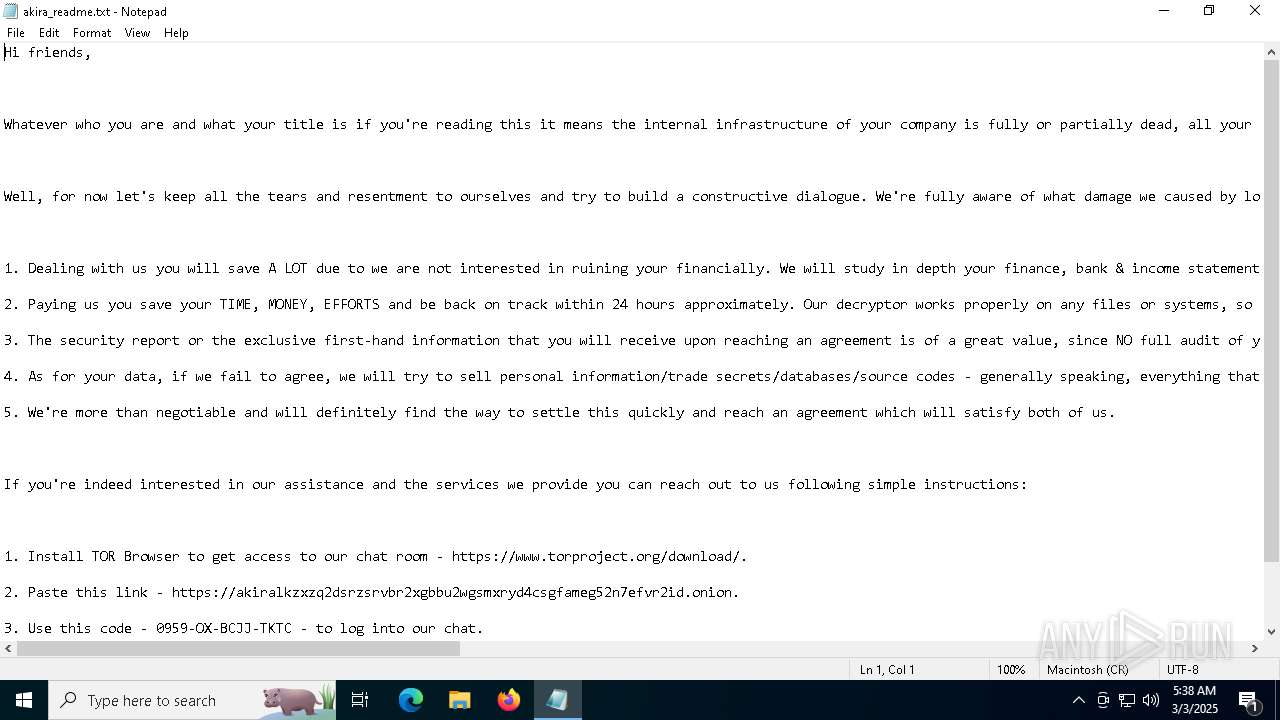
Once inside the network, Akira conducts a multi-stage attack: first it creates scheduled tasks and registry keys to maintain access, deploys backdoors to allow re-entry. It spreads in the network and scans it for valuable data. It exfiltrates the data and then encrypts it on the endpoint adding an .akira file extension which is a reference to the 1988 Japanese anime "Akira". A ransom note with payment instructions is generated.
Akira is good at evasion: it abuses native Windows tools to execute payloads, leverages process injection and living-off-the-land techniques (LOLBins). Some components execute filelessly, directly in memory, reducing the footprint on disk.
Akira’s Prominent Features
Considering the basic TTPs, Akira is similar to most ransomware families, but it has a number of outstanding features that render it notably dangerous:
- Akira is not industry specific though it prefers to target small and medium businesses.
- Hackers actively manage the attack lifecycle. It grants Akira sophistication and adaptability, better evasion, longer dwell time and higher success rate
- Akira can be quick and has been observed to move from initial access to information exfiltration in just two hours which is much faster than average.
- Akira’s operators practice a "decryption proof" providing to build trust and pressure victims into paying the ransom.
Akira’s Execution Process and Technical Details
ANY.RUN's Interactive Sandbox allows to detonate Akira on virtual machine with set-up parameters while bypassing its sandbox evasion capabilities.
The execution chain of Akira ransomware involves several key steps, from initial access to data encryption. Initially, Akira operators may gain entry through multiple methods, including exploiting VPNs without multi-factor authentication (MFA) and other known vulnerabilities. Once inside, they focus on privilege escalation and lateral movement.
Post-infiltration, Akira uses tools like Advanced IP Scanner, MASSCAN, PCHunter, SharpHound, AdFind, and net Windows commands to map networks, identify critical systems, and gather domain information.
It uses credential-dumping tools (e.g., Mimikatz, LaZagne) to extract credentials from memory (LSASS) or browsers. In some cases, Akira extracts the NTDS.dit file from domain controllers by manipulating virtual machine (VM) backups, granting access to domain admin privileges.
To evade detection, Akira actors employ various defense evasion strategies. They may use tools such as PowerTool, KillAV, and Terminator to disable antivirus solutions. Registry modifications are performed to disable or reconfigure Microsoft Defender and to hide accounts on the login screen, ensuring their malicious activities remain undetected for as long as possible.
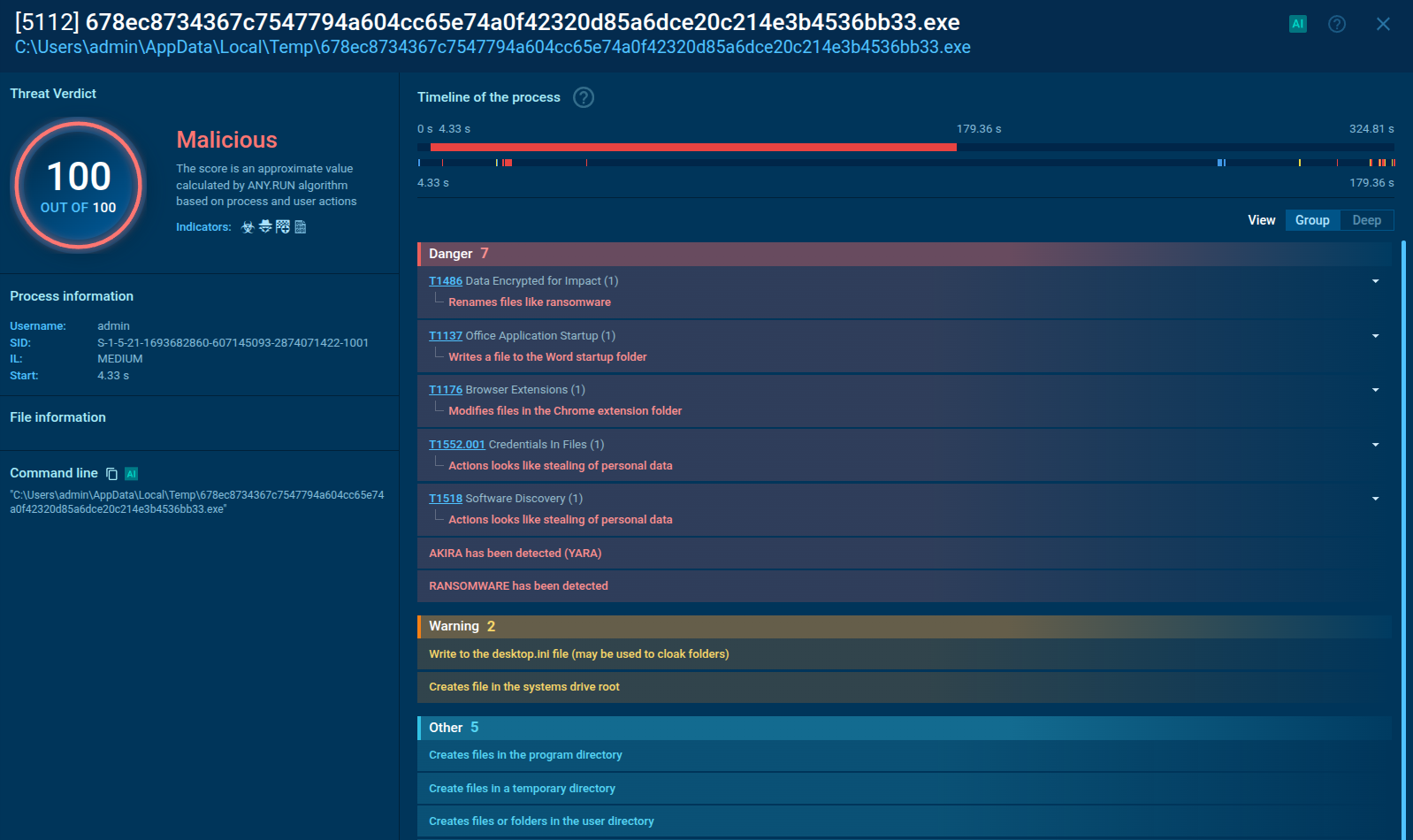
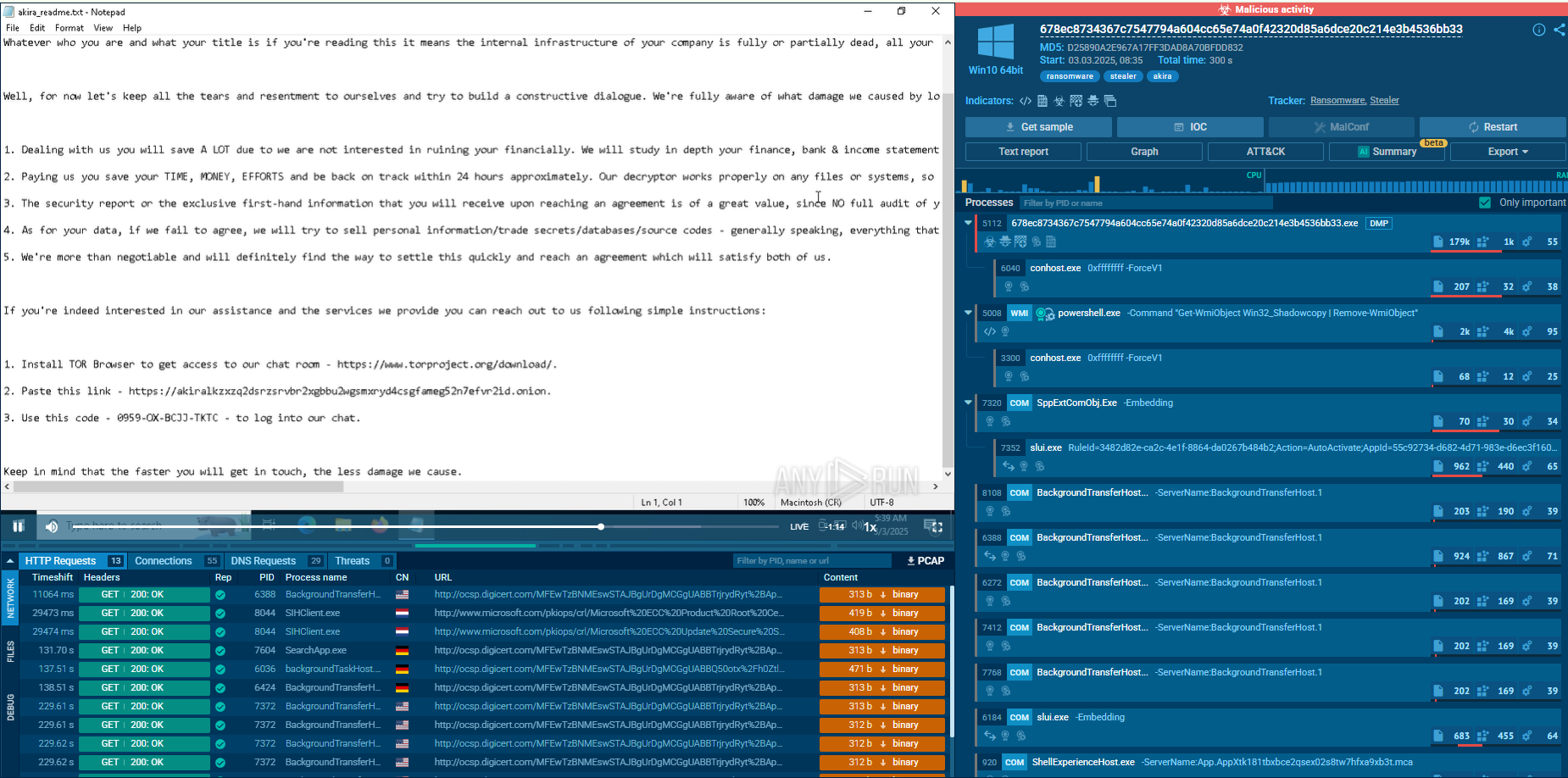
In the final stages, attackers exfiltrate and encrypt data. Akira uses a combination of ChaCha20 and RSA encryption algorithms for secure data encryption. Files are renamed with the .akira extension, and a ransom note is left behind. PowerShell commands are executed to delete Volume Shadow Copy Service (VSS) files—preventing easy file recovery.
In one observed instance, a PowerShell process (PID 5008) deleted these VSS files. Data is also compressed (using tools like WinRAR, FileZilla, WinSCP, Rclone) and exfiltrated, often camouflaged as legitimate traffic to avoid detection.
After encrypting and exfiltrating data, Akira places ransom notes, such as akira_readme.txt, in various directories. These notes provide instructions for victims to recover their encrypted files by paying a ransom. The ransom demand marks the culmination of the attack, as the attackers attempt to extort payment in exchange for the decryption key.
Gathering threat intelligence on Akira malware
Akira continues to steadily spread and to result in more victims calling for special attention by SOC teams for timely prevention and response. Use Threat Intelligence Lookup to track IOCs like C2 domains, hashes, and known IPs related to Akira; apply YARA rules to identify malicious binaries and scripts.
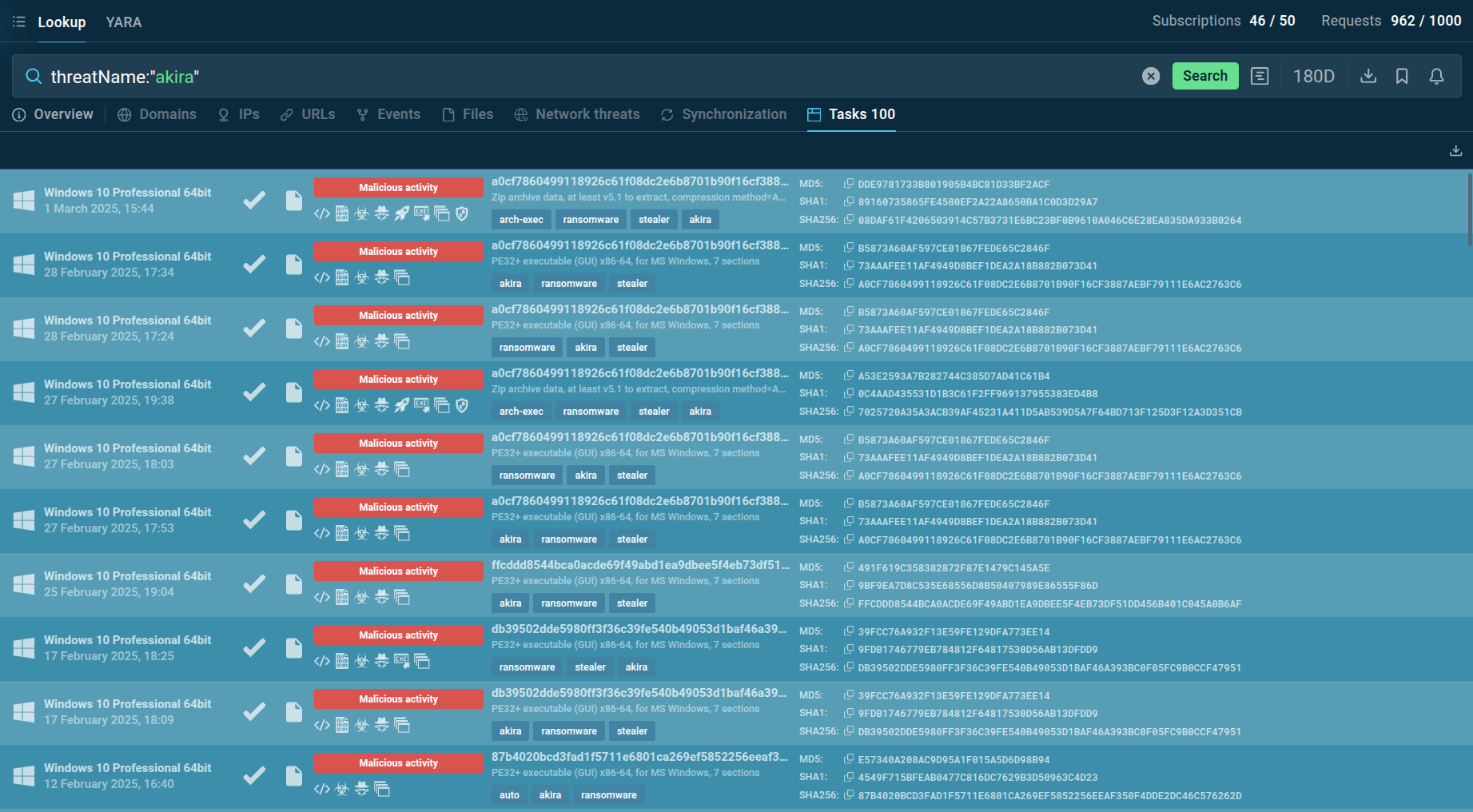
With the use of the query threatName:"akira", we can identify the latest samples of this ransomware and collect fresh intel.
TI Lookup provides a list of recent sandbox sessions featuring analysis of Akira Ransomware. You can explore each of these in more detail and export the findings in JSON.
Conclusion
Akira RaaS has emerged as a significant threat in the landscape because it enables even low-skilled actors to deploy highly sophisticated ransomware attacks and operates encryptors for Windows and Linux operating systems. Organizations should secure their perimeter and ensure proactive defense against this threat by employing threat intelligence tools like TI Lookup to gather the latest IOCs.
Other malware & phishing threats
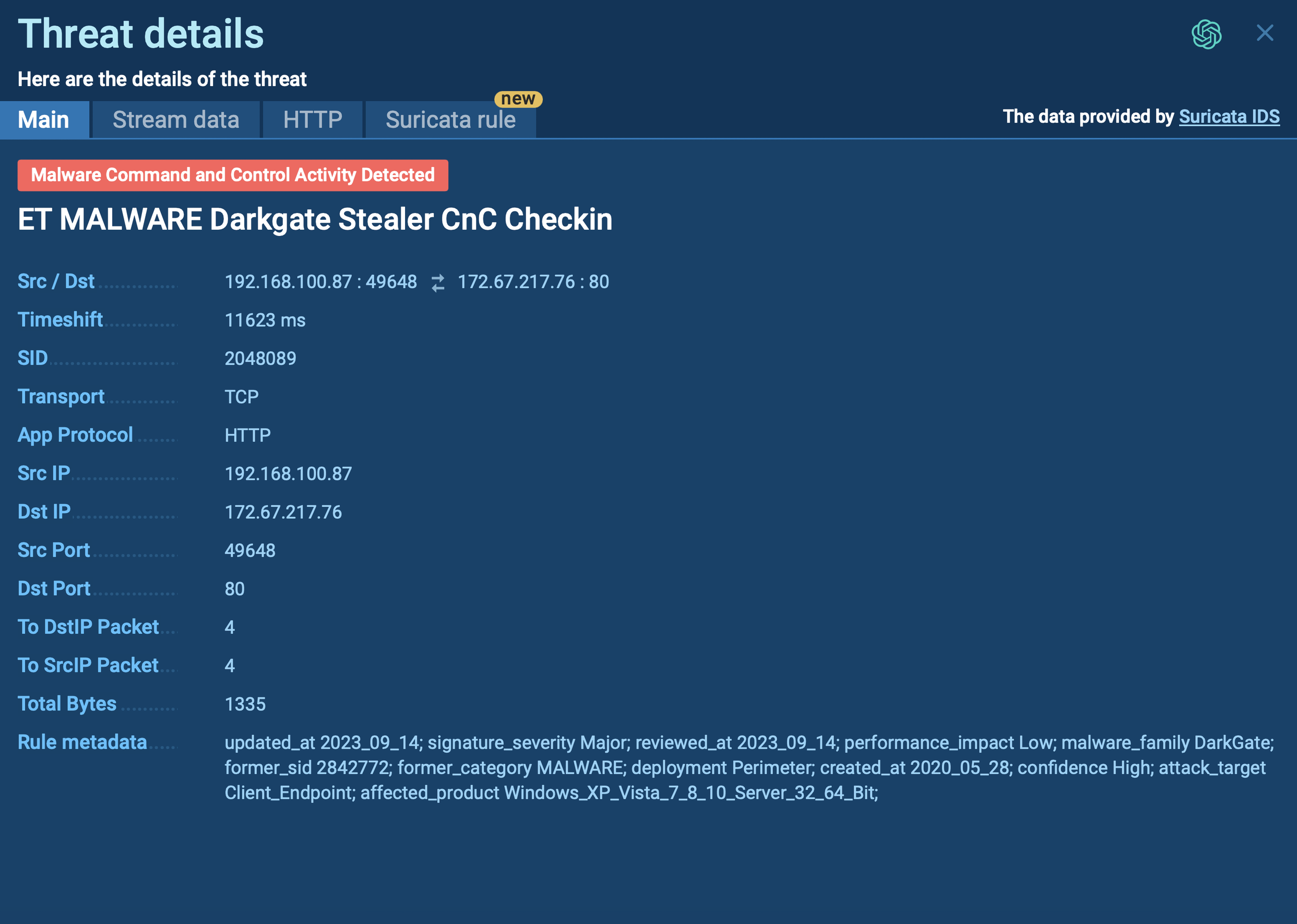 DarkGateDarkGate is a loader, which possesses extensive functionality, ranging from keylogging to crypto mining. Written in Delphi, this malware is known for the use of AutoIT scripts in its infection process. Thanks to this malicious software’s versatile architecture, it is widely used by established threat actors.
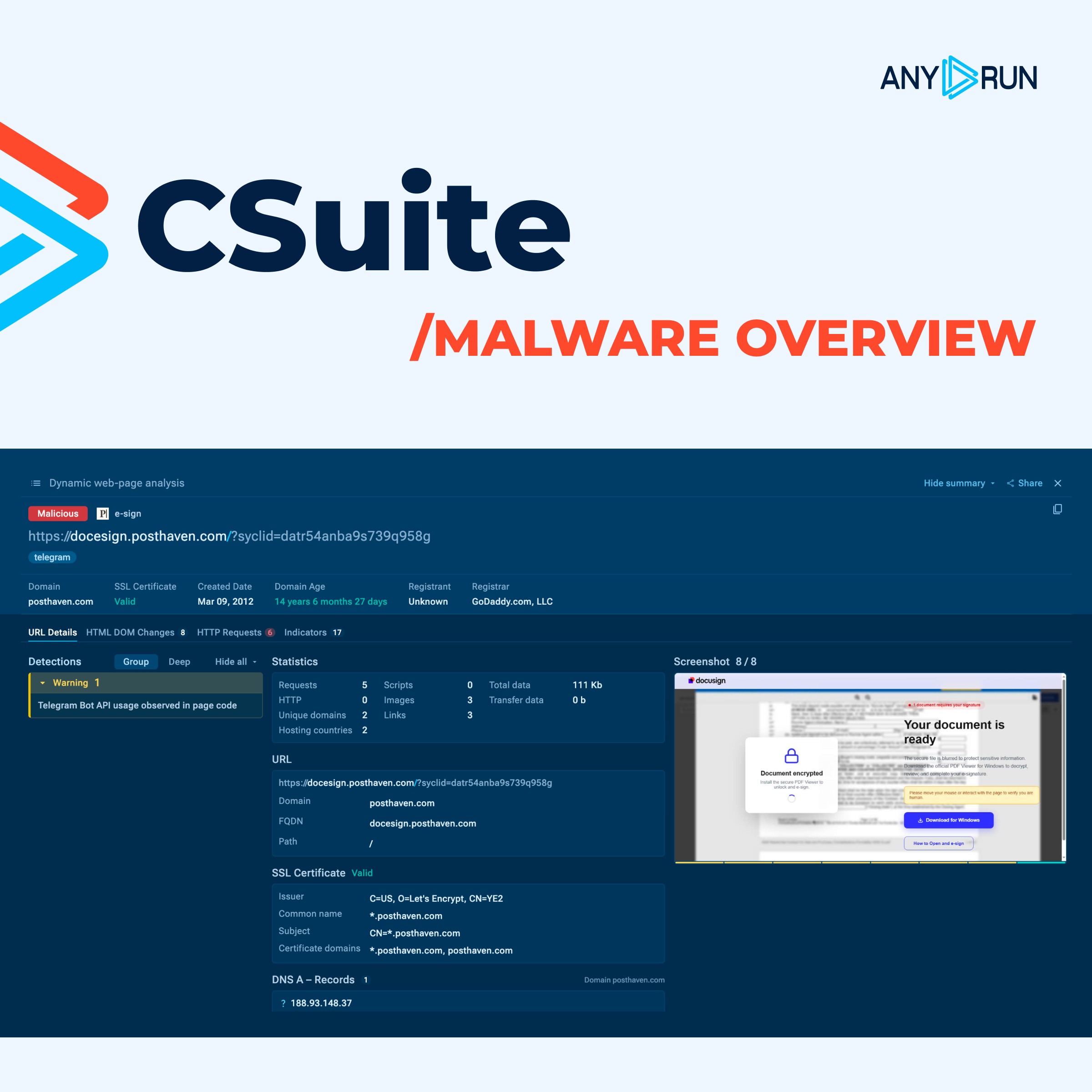 CSuiteCSuite is a financially motivated phishing and remote-access operation that uses counterfeit business document pages, credential-harvesting infrastructure, and legitimate remote-management tools to compromise organizational identities and devices.
 FlowerStormFlowerStorm is a phishing-as-a-service (PhaaS) platform used by cybercriminals to steal Microsoft 365 credentials and bypass multi-factor authentication (MFA) protections through adversary-in-the-middle (AiTM) attacks. Emerging after the disruption of Rockstar2FA in late 2024, FlowerStorm rapidly gained popularity among attackers targeting enterprises across North America and Europe.
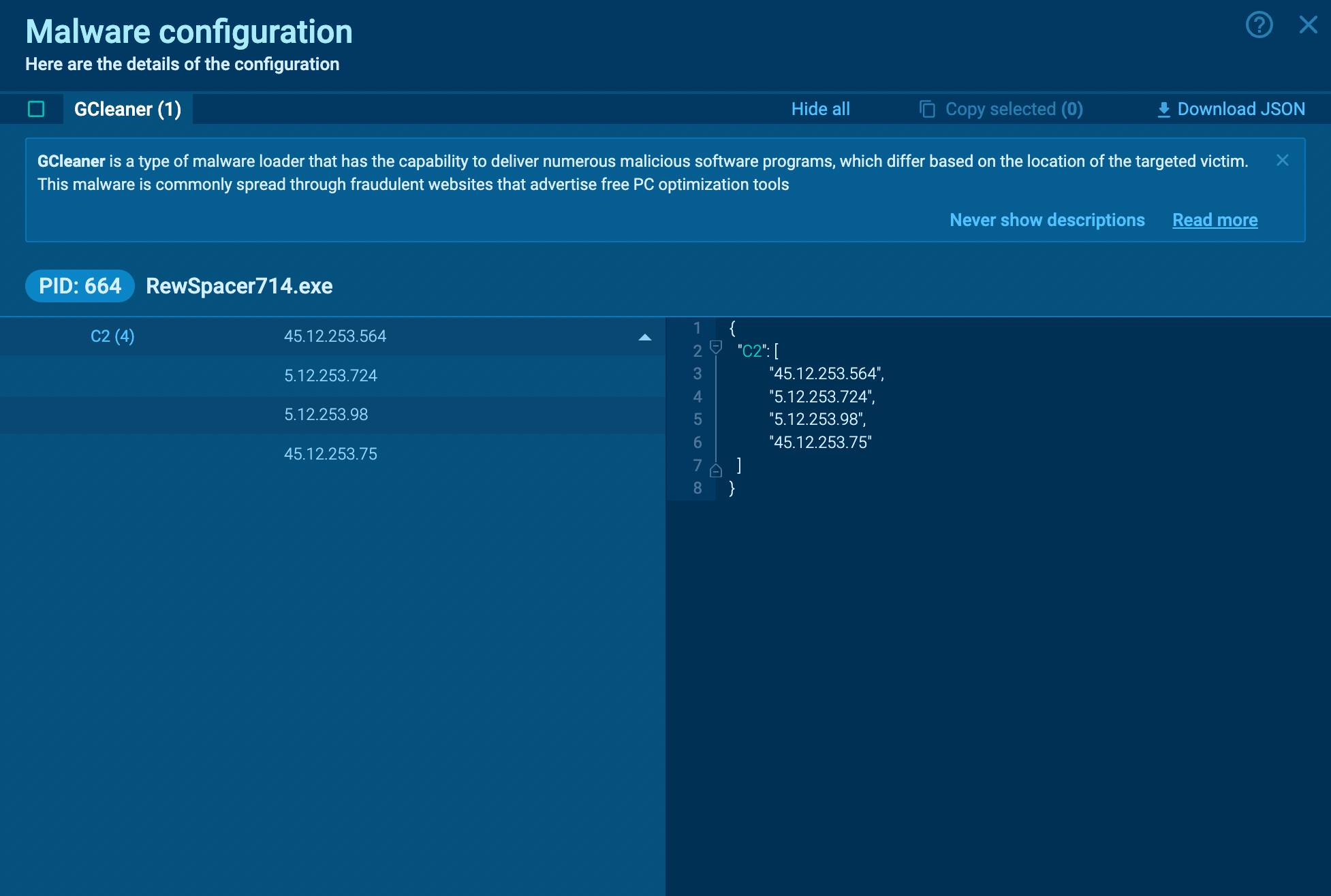 GCleanerGCleaner is a type of malware loader that has the capability to deliver numerous malicious software programs, which differ based on the location of the targeted victim. This malware is commonly spread through fraudulent websites that advertise free PC optimization tools
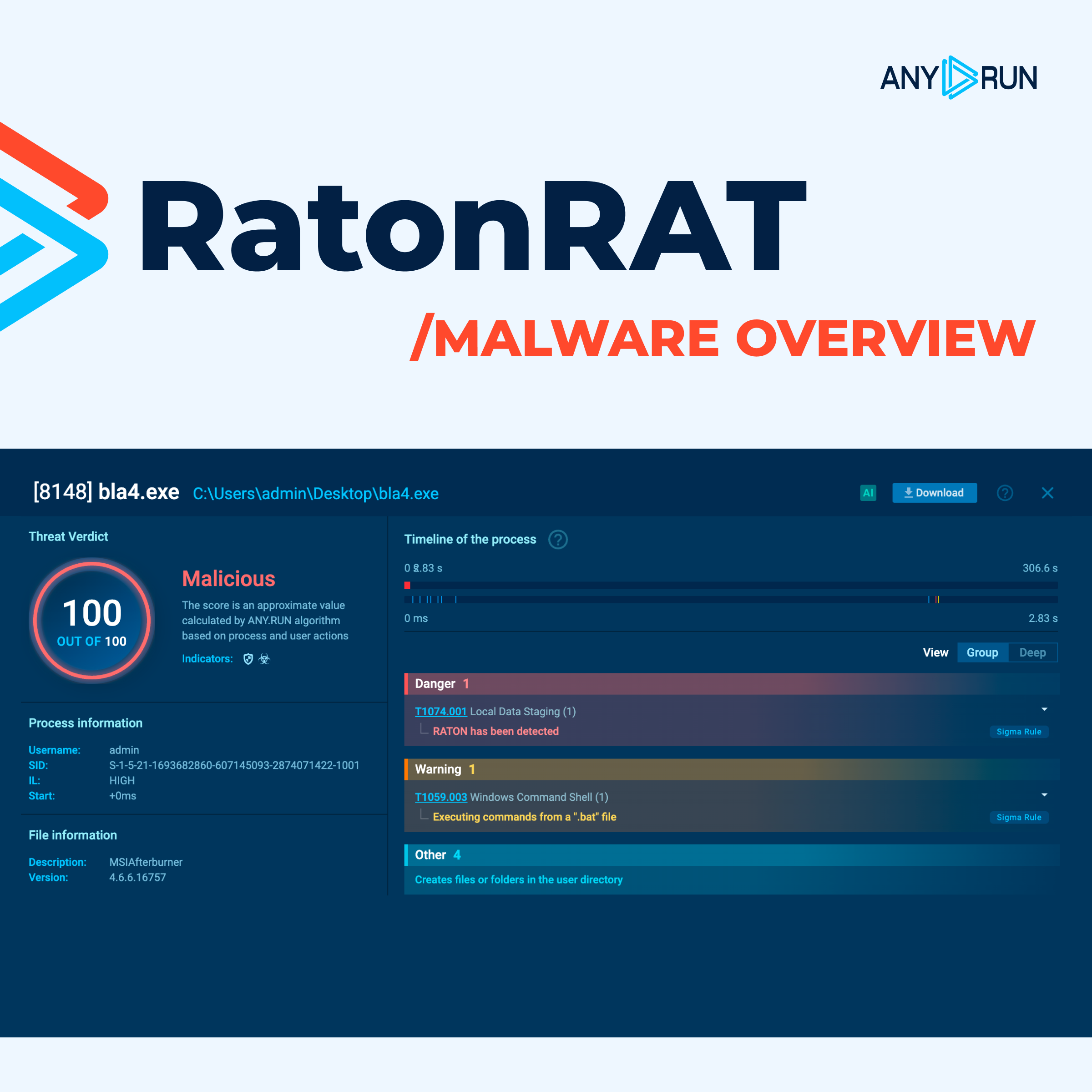 RatonRATRatonRAT is a .NET-based Remote Access Trojan targeting Windows systems. It supports credential theft, screen capture, system and hardware discovery, persistence, and C2 communication. Samples use techniques such as Registry Run keys and scheduled tasks for persistence, with some variants employing anti-analysis and evasion techniques.
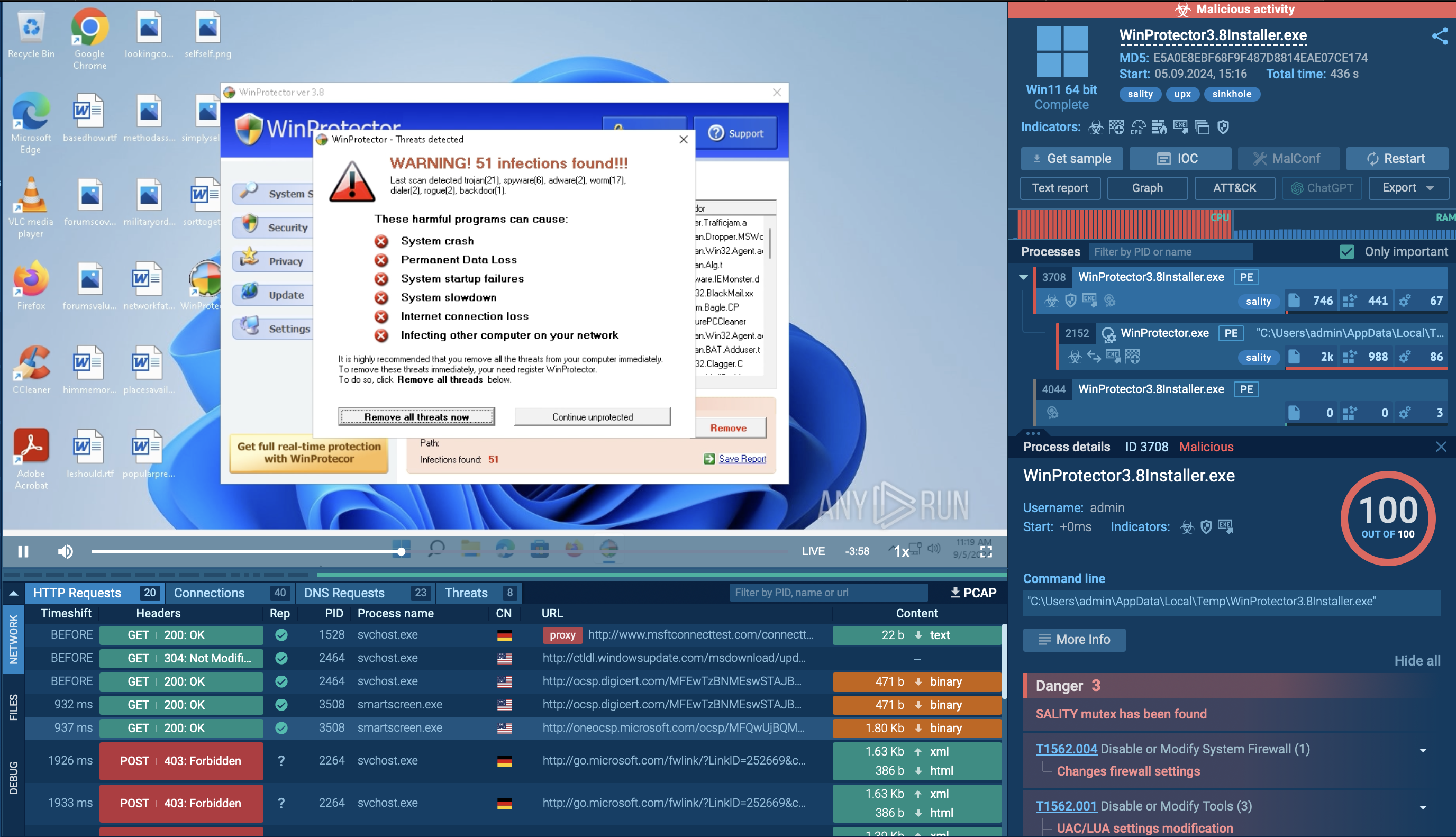 SalitySality is a highly sophisticated malware known for infecting executable files and rapidly spreading across networks. It primarily creates a peer-to-peer botnet that is used for malicious activities such as spamming, data theft, and downloading additional malware. Sality has strong persistence mechanisms, including disabling security software, making it difficult to remove. Its ability to spread quickly and silently, along with its polymorphic nature, allows it to evade detection by traditional antivirus solutions.